Since October 7th, Jewish communities are experiencing vast challenges, including navigating internal political differences as well as facing tensions and animosity in coalitions, on campuses, and beyond. Resetting the Table, which builds societal capacity for communication and collaboration across charged political divides, has been flooded with unprecedented need and demand from Hillels, camps, young adult organizations, and Federations, as well as from higher education administrations, workplaces, and institutions outside the Jewish community. To support leaders in these settings, Resetting the Table has multiplied its trainings, resources, and facilitated forums to help people de-escalate tensions, talk to rather than past each other, and strengthen lines of relationship, learning, and collaboration across their differences.
I feel so much more equipped not only to facilitate dialogue sessions, but also to generally be better at dealing with disagreements that come up in a professional (and even personal) setting. At first glance, it would be easy for a skeptic to write off Resetting the Table as wishy-washy, trite, or ‘both-sidesy.’ But that couldn’t be further from the truth—our fellowship was rigorous, deeply thoughtful, and rooted in a clear understanding of both psychological and social realities.
— Aaron, rabbinical student, Yeshivat Chovevei Torah and Rabbinic Intern, Hebrew Institute of Riverdale
Among RTT’s offerings, its intensive training programs for Jewish professionals have expanded significantly since October 7th, equipping Jewish leaders and professionals across the country with skills to respond to flashpoint moments, build proactive relationships across lines of difference, strengthen Israel engagement, counter antisemitism, and build healthier and more resilient communities. RTT’s methodology is one of the most robust and effective approaches for facilitating challenging conversations in the country, recognized as best-in-class both within and beyond the Jewish world. By working closely with strategic partners such as Hillel International, Jews of Color Initiative, Foundation for Jewish Camp, rabbinical schools, Federations, BBYO, OneTable, Repair the World, Honeymoon Israel, and others, RTT is building a national field of trained facilitators and coaches to support productive discussion and inquiry on Israel and other important issues across Jewish life.
The training with Resetting the Table has been transformational for me. We were taught practical and impactful skills and given the space and tools to practice them. When we were first told to engage with people across difference, I realized that I had already anticipated another leader’s stance. But once we actually started, it turns out their opinion was as nuanced as mine and we grew not only in our understanding of the issue, but in our relationship to one another.
— Rori, Maharat, Senior Vice President for Community Relations, JCPA and former Executive Director, JCRC of St. Louis
More than 4,100 participants from the Jewish community have engaged with RTT this year, including more than 1,900 unique Jewish educators, rabbis, Hillel professionals, and lay leaders positioned to reach tens of thousands more. Post-program evaluation shows that Jewish leaders become more confident and capable of leading tough conversations within their own communities and beyond, applying their learnings internally to build communal cohesion and healing, and also externally to strengthen relationships with other communities in this challenging time. In longitudinal interviews and surveys, 95 percent of alumni reported continuing to use RTT tools and skills one to ten years after participating in a program, with majorities reporting they used RTT tools to navigate differences on Israel; to address tensions post-Oct 7th; to combat antisemitism; to support their constituents to speak and listen to each other better; to engage new, skeptical, and resistant audiences; and to foster an environment of communal cohesion and resilience.
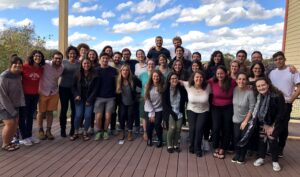 Given the tensions on college campuses, RTT’s partnership with Hillel has been especially important. Special training programs for Hillel staff—including facilitation training for mid-to-senior career Hillel professionals as well as early-career Hillel professionals—helped them facilitate student experiences to strengthen relationships and understanding across differences in this difficult year. Hillel International reports that next to increased security, Hillel professionals describe the tools RTT provides as their greatest need. Participating professionals were equipped with communication tools that helped them support Jewish students to feel less anxiety and trepidation when talking about Israel, antisemitism, and other charged topics; offer programs where Jewish students can feel safe to express what they’re experiencing and feel more strongly connected to Jewish life and to each other even across strongly differing perspectives; build trust with students who have felt alienated from Hillel in the past or during this time due to political differences; and navigate inter-group relationship-building with administrators, DEI departments, and non-Jewish student groups. As a result, on campuses where RTT has trained Hillel professionals over the past several years, students report relief and gratitude for the space to share their experiences and views on Israel and other tough issues, and to listen to their peers in turn. Hillel professionals report new and different students participating in Hillel programs, and improved relationships between Jewish and non-Jewish students even during moments of escalation
“There [are] an abundance of resources out there to [address] challenges that are focused outward, but there are very few focused inward [on Jewish students]… How can we ever expect students to have respectful, authentic conversations with folks they disagree with outside of the Jewish community, if we can’t do so within the Jewish community? That’s really our focus, our north star, and I believe it’s one of the reasons our Israel campus climate is a positive one.”
– Jenna, Executive Director, Queens College Hillel
Resetting the Table’s framework and tools were specifically designed to overcome the toxic discourse unfolding around us today—splintering coalitions, campuses, workplaces, and communities alike. This framework—crucial long before October 7th—will be ever more important to engage the next generation, combat polarization and hate, and ensure the resiliency of the Jewish community for years to come. RTT gives leaders the tools to address their deepest challenges while holding the difficulty and pain, building communal solidarity and care, and learning from people’s differences. With this approach, political differences evolve from a source of tension, anxiety, and alienation into an engine of communal health and cohesion.
The Jim Joseph Foundation is a supporter of Resetting the Table. Visit resettingthetable.org URL for more information.
 Atra helps rabbis learn how to engage people in new ways—both inside and outside of congregational walls—and strengthens connections among fellow clergy. More than 1,000 rabbis h
 communities’ needs and clearly define what excellent rabbinic leadership looks like. Key findings from Atra’s 2023 study showed that young American Jews want more experiences with rabbis because those interactions help them feel more spiritually connected and more connected to a Jewish community. Atra shared insights from the research about what factors make for positive interactions between young adults and rabbis, how these interactions help young adults feel more comfortable and confident being Jewish, and where rabbis can look to engage even more young people.
 and in person, in hospitals and in recovery programs, in homes and in cafes, in Yeshivot and on street corners–everywhere that communities are found and built.
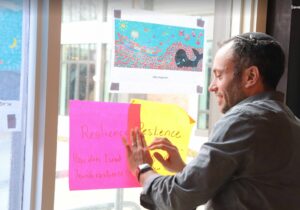 quality, meaningful, and engaging Yamim programs for students and communities.
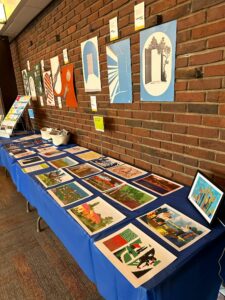 In each Yamim training, M² crafted a deliberate and curated experience, from the design of the space – which was set up like an art gallery – to the balance between theoretical knowledge and hands-on work. Participants were introduced to the core idea of the training: using values to guide them through crafting the messages they want to convey in their commemorative ceremonies. The afternoon was dedicated to a lab session where participants crafted Yamim lesson plans, working collaboratively to brainstorm and test their ideas with each other. The centerpiece of the training was the Yamim Journal – a beautifully designed booklet curating about 100 different resources from both M² and other organizations, featuring lesson plans, art, media, music, conversation prompts and even step-by-step instructions for planning Yamim ceremonies. Participants said they appreciated its focus on art and poetry as points of entry for authentic discussions on difficult topics.
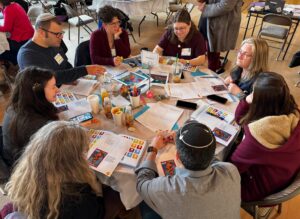 Participant
 Birthright Israel educational components. This includes an orientation to prepare volunteers for their placements; Kiddush and Shabbat experiences; sessions where they can discuss and process their experiences, thoughts, and feelings; enrichment activities that provide respite, a sense of community, and mental release for the participants (including a workshop, a city tour, a meal at a restaurant, and other activities that support local businesses and the Israeli economy); a geopolitical lecture led by an expert with an overview and Q&A period; an activity with Israeli
  A key aim of the digest was to help the field improve its collective capacity to be smart consumers and users of research. All studies have limitations, and the digest illuminated those limitations without judgment. Interpreting sophisticated research for a general audience, and unpacking where data can and cannot be applied, aligns with CASJE’s mission to see research applied effectively. Examining study limitations in the digest also enabled the reader to answer critical questions: What do these findings mean for me and what I am trying to accomplish for the people I serve, in this place where they are, at this time that we’re in, and with the resources I have. To that end, CASJE also shared a discussion guide in each digest for use with colleagues to frame discussion about the featured studies and their applicability in various Jewish communal settings.
 outcomes. These grants are intended to stimulate research that investigates Jewish education and its effects, and that is well-positioned to inform practice. Previous Small Grants projects have investigated learning across the wide variety of settings where Jewish education happens and focus on learners of any age across the lifespan. Other current CASJE projects include its
 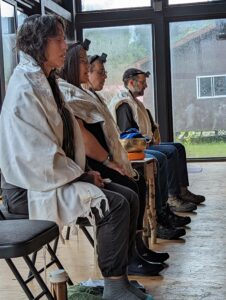 Of the more than 10,000 people IJS engages annually through its programs and resources, 90 percent of participants say that IJS supports their learning and growth. Eighty-eight percent express interest in further developing their Jewish spiritual practices.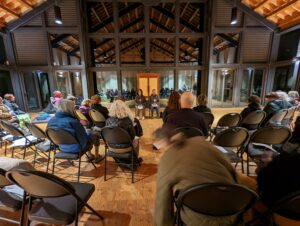
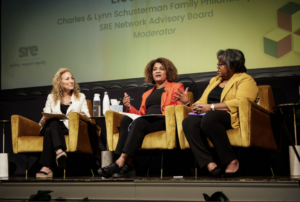
 is designed to support organizations and individuals planning their own events around healthy arguments, with or without the initiative’s specific materials. A healthy argument can include a conversation in which two or more people disagree, but are able to learn something new about someone or something else; a conversation from which one learns something from a disagreement; a disagreement in which one learns something new about themselves, about someone else, or about a subject matter; or a disagreement where the goal is to learn something new, rather than to try to agree or convince.
 Sephardi and Mizrahi lens. The online quarterly publication offers fresh and impactful content that elevates the perspectives and raises the profile of Sephardi and Mizrahi people and communities.
 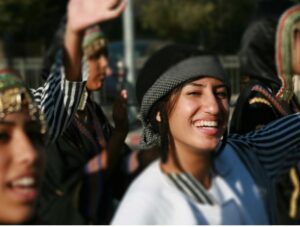 JIMENA also has undertaken
  information for the field. More than 80,000 people come to Israel each year through IETA partner organizations, representing different age cohorts, target audiences, and travel experiences. Of course the common link is each partner’s dedication to Israel educational travel.
 Prior to COVID, there was little cross-communication other than through professional friendships we might have had or through other meetings convened for those of us working in the field of Jewish engagement. As a coalition we have created a field of practice as professionals. We can focus on looking forward to how we work with the government of Israel, advocating a policy to support travel, funding training across the field and building up the infrastructure needed to insure our success.
 These reports and tools are used by communities, foundations, and individual schools to optimize efficiency and maximize potential, often making a direct impact on decision-making. In one case, a school leader who was struggling to recruit new teachers accessed data from DASL (Data and Analysis for School Leadership), Prizmah’s financial and operational benchmarking tool, and realized that her school’s compensation structure put them on the very low end in the marketplace. Recognizing the impact this had on their ability to recruit talented educators, this leader and her board made the decision to increase teacher salaries.
 champions the use of data by schools, the organization itself make research and data a critical part of its operations.